China Best Industrial Robots for Innovative Manufacturing Solutions?
In the rapidly evolving landscape of manufacturing, the role of Industrial Robots has become increasingly significant. These advanced machines offer innovative solutions that enhance efficiency and productivity. Their ability to perform repetitive tasks with precision allows human workers to focus on complex operations.
China is at the forefront of this technological revolution. The nation’s commitment to innovation is evident in its growing market for Industrial Robots. Companies are investing heavily in robotic automation, aiming to elevate their operational capabilities. However, as we embrace these technologies, it's vital to consider their implications. The integration of robots into manufacturing processes prompts questions about workforce displacement and job re-skilling.
The best Industrial Robots in China are not just about efficiency; they embody a blend of intelligence and adaptability. These machines can learn from their environments, yet they are not without flaws. Achieving a seamless integration requires ongoing assessment and improvement in robotic design and application. As we explore these innovative solutions, reflection on their broader impact becomes essential.
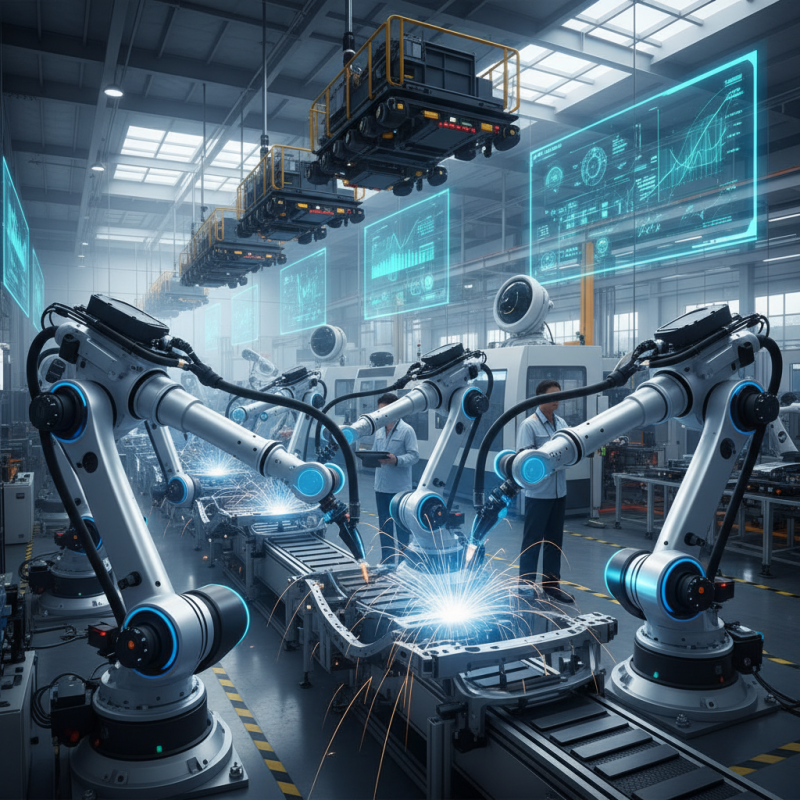
China's Industrial Robot Market Overview and Growth Trajectory
China is witnessing remarkable growth in its industrial robot market, expected to reach $62 billion by 2025. This boom is driven by the push for automation and increased productivity across various sectors. According to a report by the International Federation of Robotics, China has become the world’s largest industrial robot market. In 2020 alone, over 140,000 units were sold, representing a significant year-on-year increase.
The demand for robots is primarily fueled by the manufacturing sector, which includes automotive, electronics, and consumer goods. Companies are investing heavily in robotic solutions to stay competitive. However, the market faces challenges such as a shortage of skilled workers and high implementation costs. This could result in uneven growth across regions. Innovation remains crucial as traditional manufacturing methods struggle to keep pace with emerging technologies.
For many industries, integrating robots is a complex process. While efficiency gains are evident, some companies report difficulties in effectively deploying these technologies. Training workers to operate and maintain robotic systems efficiently is a critical concern. Proper alignment of new technologies with operational goals is essential. As the market evolves, understanding the right balance between automation and human labor will be pivotal for sustainable growth.
China's Industrial Robot Market Overview
The chart above illustrates the growth trajectory of annual industrial robot sales in China from 2018 to 2023. The steady increase indicates a robust market expansion driven by technological advancements and an increasing demand for automation in manufacturing.
Key Players in China's Industrial Robotics Industry: Companies and Innovations
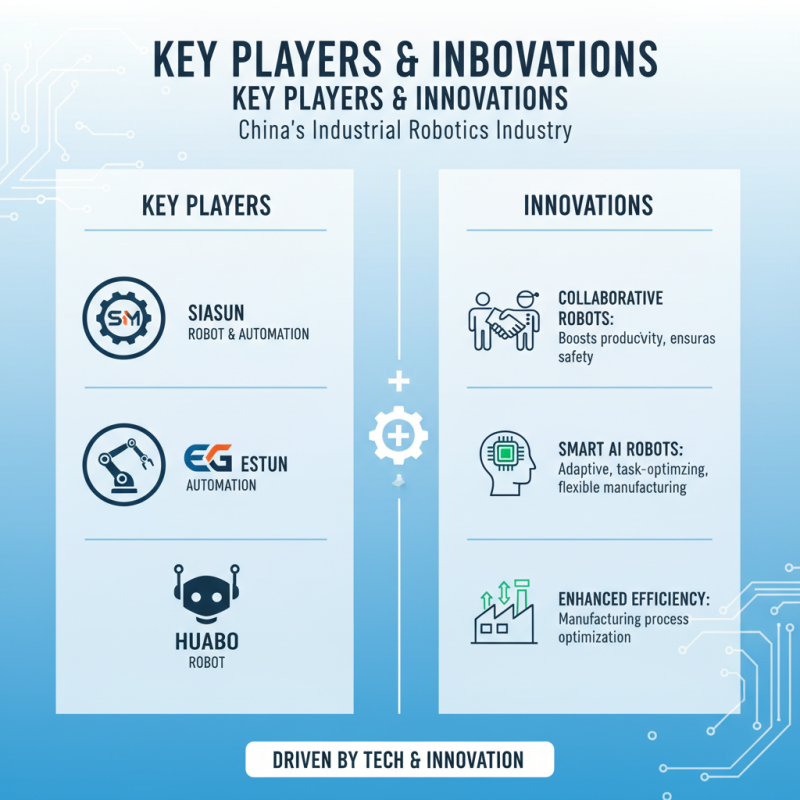
China's industrial robotics industry is rapidly evolving, driven by a surge in innovation and technological advancements. Key players are intensifying their focus on creating robots that enhance efficiency in manufacturing processes. These innovations include collaborative robots that work alongside humans, increasing productivity without compromising safety. The development of smart robots equipped with artificial intelligence is noteworthy. They adapt to tasks and optimize performance, reflecting the need for flexible manufacturing solutions.
Various companies are pouring resources into research and development. Some are exploring the integration of robotics with IoT technologies. This connection enables real-time data analysis, which significantly improves decision-making processes on the production floor. However, it’s crucial to reflect on the challenges faced in integrating these advanced systems. Not all robots can seamlessly fit into existing workflows. Companies must evaluate their specific needs before transitioning to automation.
Moreover, while the advancements are impressive, there are concerns about workforce adaptation. The fear of job displacement persists among employees. Upskilling initiatives are essential to ensure that workers can thrive alongside robots. The balance between technological advancement and workforce stability is delicate. As the industry progresses, continuous dialogue is necessary to address these societal implications.
Technological Advancements Driving China's Industrial Robots in Manufacturing
China's industrial landscape is witnessing a significant transformation driven by technological advancements in robotics. Recent reports indicate that China's industrial robot market is projected to grow at a CAGR of over 20% through 2025. This growth is fueled by innovation in artificial intelligence and machine learning, which enhance robotic capabilities in manufacturing processes.
Manufacturers are increasingly turning to robots for precision and efficiency. Data from industry analysts suggests that automated production lines can reduce operational costs by up to 30%. Robotics technology not only boosts productivity but also addresses labor shortages in various sectors. Despite these advancements, challenges remain. Many companies struggle to integrate robots into their existing workflows, leading to inefficiencies.
Tips: Investing in training for staff is crucial. Employees must adapt to new technologies effectively. Additionally, pilot programs can help businesses evaluate the impact of robots before full-scale implementation. Continuous assessment of robotic performance is essential to maximize benefits and minimize disruptions. Consideration of these factors is vital for those looking to embrace robotics in their manufacturing processes.
Sector-Specific Applications of Industrial Robots in China's Manufacturing Landscape
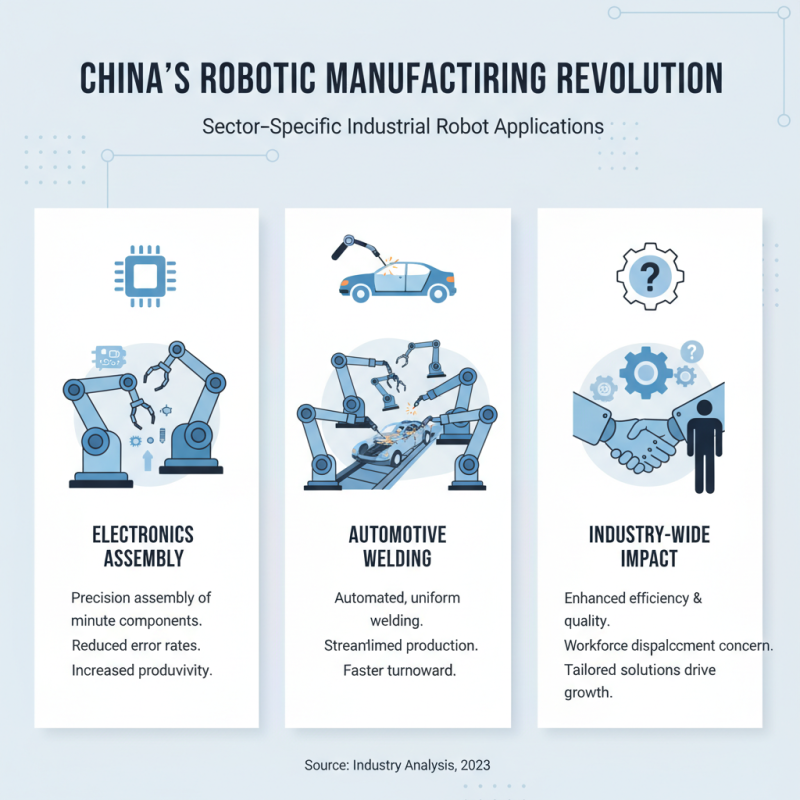
Industrial robots are transforming China's manufacturing landscape. They are tailored to meet specific sector needs. For instance, in electronics, precision is crucial. Robots can assemble tiny components with exact accuracy, reducing errors and increasing productivity. The automotive industry benefits greatly from robotic welding. Streamlined processes ensure faster turnaround times. Yet, the reliance on robotics raises concerns about workforce displacement.
In the textile sector, robots excel in repetitive tasks. They enhance efficiency in fabric cutting and pattern assembly. However, these advancements come with challenges. Skills training for workers is essential. Without adequate training, employees may struggle to adapt. In food processing, robots handle packaging. They ensure hygienic conditions and speed up production. But, not all small manufacturers can afford this technology.
The integration of robots varies across industries. Some sectors embrace automation, while others hesitate. This discrepancy raises questions. How can smaller businesses leverage this technology? Additionally, is there a risk of losing artisanal craftsmanship? These considerations highlight the need for a balanced approach to innovation. The path forward should ensure that human and machine collaboration enhances production without compromising workforce integrity.
Future Trends: AI and Automation in China's Industrial Robotics Sector
The landscape of industrial robotics in China is evolving rapidly, driven by advancements in AI and automation. Manufacturers are increasingly adopting smart technologies to enhance productivity and efficiency. These innovations are reshaping traditional production processes, allowing for greater customization and quicker turnaround times.
AI is at the forefront of this transformation. Algorithms now enable robots to learn from their environments, optimizing their functions in real-time. This capability not only improves precision but also reduces waste in manufacturing. However, there are challenges. The integration of AI can be complex, often requiring significant investment in training and infrastructure. Many companies struggle to adopt these advanced technologies effectively.
Automation presents distinct advantages and potential downsides. While it can lead to increased output, concerns about job displacement are rising. Workers in lower-skilled positions may find themselves vulnerable as tasks become automated. This raises important questions about the future workforce in China's manufacturing sector. Balancing technological advancement with human employment is critical as the industry navigates this evolving landscape.
China Best Industrial Robots for Innovative Manufacturing Solutions
| Robot Type |
Payload Capacity (kg) |
Application Area |
Autonomy Level |
Estimated Cost (USD) |
| Articulated Robot |
100 |
Assembly |
High |
50,000 |
| Collaborative Robot |
5 |
Material Handling |
Medium |
35,000 |
| Delta Robot |
3 |
Packaging |
High |
40,000 |
| SCARA Robot |
10 |
Pick and Place |
Medium |
30,000 |
| Mobile Robot |
250 |
Logistics |
Medium |
60,000 |